






Table of Contents
- Introduction to Cybersecurity
- What is Cybersecurity?
- Why Cybersecurity is Important
- Common Cybersecurity Threats
- Malware
- Phishing Attacks
- Ransomware
- Data Breaches
- Social Engineering
- Essential Cybersecurity Best Practices
- Cybersecurity for Businesses
- Cybersecurity for Individuals
- Real-World Cybersecurity Examples
- Future Trends in Cybersecurity
- Frequently Asked Questions (FAQ)
- Conclusion
Introduction to Cybersecurity
In today’s digital world, cybersecurity has become one of the most critical aspects of modern life. As more people and businesses rely on the internet for communication, banking, shopping, education, and work, cyber threats continue to evolve at an alarming rate.
Cybersecurity is no longer a concern only for large corporations or government agencies. Individuals, small businesses, and organizations of all sizes face cyber risks every day. Understanding cybersecurity principles can help protect sensitive information, financial assets, and digital identities.
What is Cybersecurity?
Cybersecurity refers to the practice of protecting computers, servers, mobile devices, networks, and data from unauthorized access, attacks, and damage.
The primary goal of cybersecurity is to safeguard digital assets against cybercriminals who attempt to steal information, disrupt operations, or gain unauthorized access to systems.
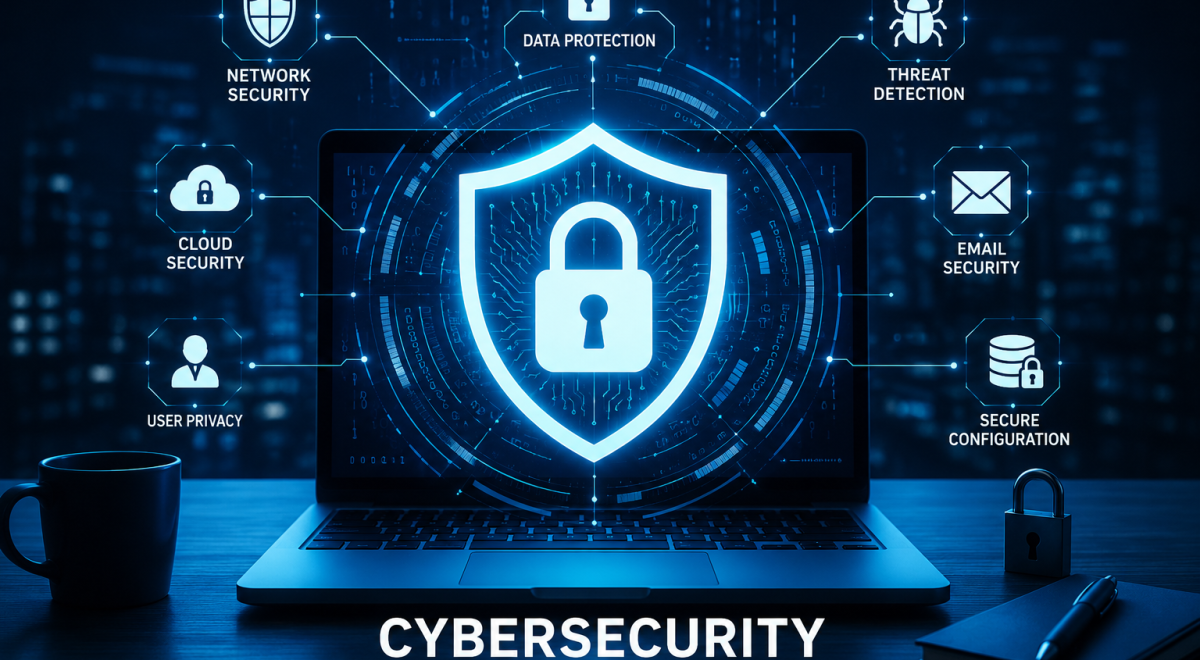
Cybersecurity includes several areas such as:
Network Security
Protecting computer networks from intrusions and malicious attacks.
Information Security
Ensuring data confidentiality, integrity, and availability.
Application Security
Securing software applications from vulnerabilities and cyber attacks.
Cloud Security
Protecting cloud-based systems, services, and data.
Endpoint Security
Securing devices such as laptops, smartphones, and tablets.
Why Cybersecurity is Important
Cybersecurity plays a vital role in protecting personal and organizational information.
Protecting Sensitive Data
Cybersecurity helps prevent unauthorized access to personal information, financial records, and confidential business data.
Preventing Financial Losses
Cyber attacks can lead to significant financial damages through fraud, theft, or operational disruptions.
Maintaining Business Continuity
Strong cybersecurity measures ensure businesses can continue operating even when facing cyber threats.
Building Customer Trust
Organizations with strong security practices are more likely to earn customer confidence and loyalty.
Common Cybersecurity Threats
Understanding cyber threats is the first step toward effective protection.
Malware
Malware is malicious software designed to damage systems or steal information.
Examples include:
- Viruses
- Worms
- Trojans
- Spyware
Phishing Attacks
Phishing attacks trick users into revealing sensitive information through fake emails, websites, or messages.
Example:
A fake bank email requesting login credentials.
Ransomware
Ransomware encrypts files and demands payment to restore access.
Fact:
Many businesses lose millions of dollars annually due to ransomware attacks.
Data Breaches
A data breach occurs when unauthorized individuals gain access to confidential information.
Common targets include:
- Customer records
- Credit card information
- Employee data
Social Engineering
Social engineering exploits human psychology rather than technical vulnerabilities.
Example:
An attacker impersonates IT support to obtain employee passwords.
Essential Cybersecurity Best Practices
Implementing cybersecurity best practices significantly reduces security risks.
Use Strong Passwords
Create passwords that include:
- Uppercase letters
- Lowercase letters
- Numbers
- Special characters
Avoid using personal information.
Enable Multi-Factor Authentication (MFA)
MFA adds an extra layer of protection beyond passwords.
Keep Software Updated
Regular updates patch security vulnerabilities that hackers may exploit.
Use Antivirus Software
Reliable antivirus programs help detect and remove malicious software.
Backup Important Data
Maintain regular backups to recover information after cyber incidents.
Avoid Suspicious Links
Never click unknown links or download attachments from untrusted sources.
Cybersecurity for Businesses
Businesses face increasingly sophisticated cyber threats.
Employee Security Training
Human error remains one of the leading causes of security breaches.
Regular cybersecurity awareness training can reduce risks significantly.
Access Control
Grant employees only the access necessary for their job responsibilities.
Security Monitoring
Continuous monitoring helps identify suspicious activity before major damage occurs.
Incident Response Plan
Organizations should develop clear procedures for responding to cyber attacks.
Cybersecurity for Individuals
Individuals can improve cybersecurity by adopting safe online habits.
Protect Personal Information
Avoid sharing sensitive information on public platforms.
Secure Home Networks
Use strong Wi-Fi passwords and updated routers.
Monitor Financial Accounts
Regularly review transactions for suspicious activity.
Be Careful on Social Media
Limit the amount of personal information shared publicly.
Real-World Cybersecurity Examples
Example 1: Phishing Scam
An employee receives a fake email appearing to come from the company CEO requesting sensitive information.
Without proper training, the employee may unknowingly expose confidential data.
Example 2: Ransomware Attack
A hospital’s computer systems become encrypted by ransomware, disrupting critical healthcare services.
Example 3: Data Breach
A retail company suffers a security breach exposing customer payment information.
These examples demonstrate why cybersecurity is essential for both organizations and individuals.
Future Trends in Cybersecurity
The cybersecurity landscape continues to evolve rapidly.
Artificial Intelligence in Security
AI helps identify threats faster and improve incident detection.
Zero Trust Security
Organizations increasingly adopt Zero Trust frameworks that require continuous verification.
Cloud Security Growth
As cloud adoption increases, cloud security remains a top priority.
Internet of Things (IoT) Security
More connected devices create additional security challenges.
Internal Links
You can internally link this article to:
- Password Security Guide
- Data Privacy Best Practices
- Cloud Computing Basics
- Network Security Fundamentals
- Online Safety Tips
External Links
For additional cybersecurity resources:
- National Institute of Standards and Technology (NIST)
- Cybersecurity and Infrastructure Security Agency (CISA)
- OWASP Security Guidelines
- Microsoft Security Center
Frequently Asked Questions (FAQ)
What is cybersecurity?
Cybersecurity is the practice of protecting systems, networks, and data from cyber attacks and unauthorized access.
Why is cybersecurity important?
Cybersecurity protects sensitive information, prevents financial losses, and ensures business continuity.
What are the most common cyber threats?
Common threats include malware, phishing attacks, ransomware, data breaches, and social engineering.
How can individuals improve cybersecurity?
Individuals should use strong passwords, enable MFA, update software regularly, and avoid suspicious links.
What is ransomware?
Ransomware is malicious software that encrypts files and demands payment for their release.
What is phishing?
Phishing is a cyber attack that tricks users into revealing sensitive information through deceptive communications.
Conclusion
Cybersecurity is an essential component of modern digital life. As cyber threats continue to increase in sophistication, individuals and businesses must take proactive steps to protect their systems and data. By understanding common threats, implementing security best practices, and staying informed about emerging trends, users can significantly reduce their exposure to cyber risks.
Investing in cybersecurity today helps create a safer digital environment for the future. Whether you are an individual internet user or a large organization, cybersecurity should remain a top priority in an increasingly connected world.

RiseSom is an online media platform sharing quality content on technology, business, finance, sports, travel, and global trends. We are committed to providing reliable, informative, and reader-friendly articles.