






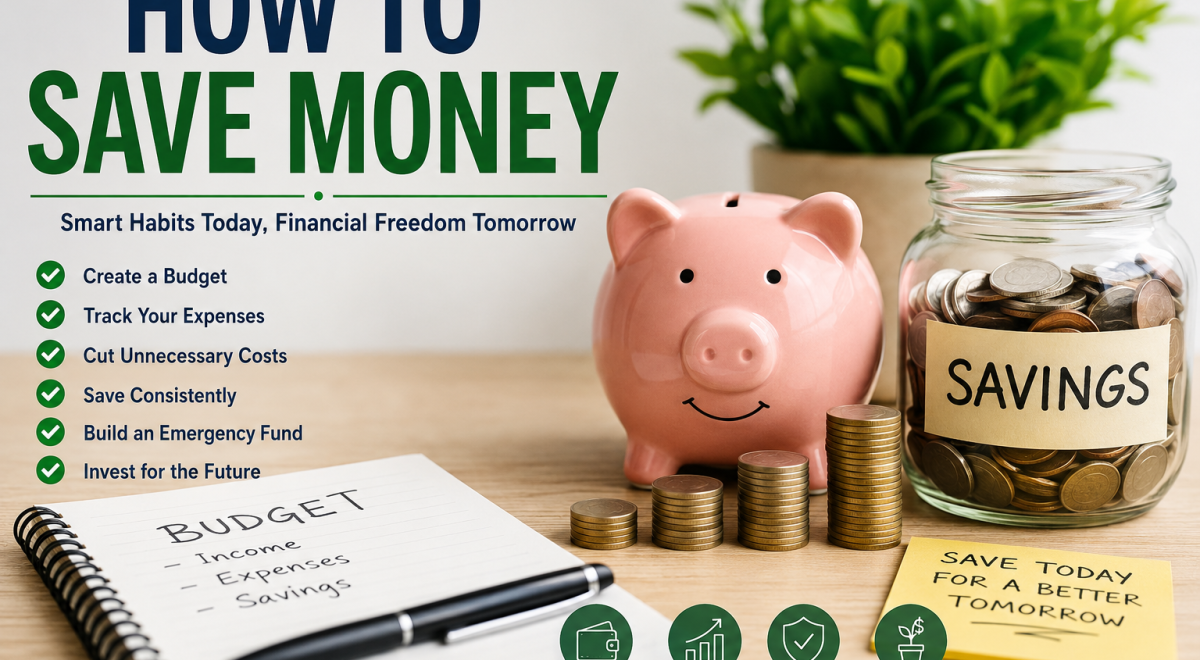
Table of Contents
- Introduction
- Why Saving Money Is Important
- Create a Monthly Budget
- Track Every Expense
- Differentiate Between Needs and Wants
- Conclusion (Part 1)
How to Save Money: The Complete Guide to Building Better Financial Habits
Saving money is one of the most valuable financial habits anyone can develop. Whether your goal is buying a home, paying off debt, building an emergency fund, or simply achieving financial freedom, learning how to save money can completely change your financial future.
Many people believe saving money requires earning a high income. In reality, successful saving depends more on good financial habits than on the amount of money you make. Small, consistent actions often produce better long-term results than occasional large deposits.
This guide explains practical, realistic, and easy-to-follow methods that anyone can apply regardless of their income level.
Why Saving Money Is Important
Saving money provides security, flexibility, and peace of mind. Unexpected expenses such as medical bills, car repairs, or job loss can happen at any time. Having savings helps you avoid unnecessary debt during difficult situations.
Some of the biggest benefits include:
- Financial security
- Less stress about money
- Emergency preparedness
- Ability to invest
- Freedom to pursue personal goals
- Better retirement planning
- Reduced dependence on credit cards and loans
People who regularly save money generally experience greater financial stability over time.
Create a Monthly Budget
A budget is the foundation of every successful financial plan. Without knowing where your money goes, it becomes almost impossible to improve your savings.
Start by listing:
- Monthly income
- Fixed expenses
- Variable expenses
- Savings goal
Example Budget
Monthly Income: $2,500
Expenses
- Rent: $800
- Food: $350
- Transportation: $200
- Utilities: $150
- Entertainment: $150
- Savings: $500
- Other Expenses: $350
Following a simple budget allows you to control spending instead of wondering where your money disappeared.
Track Every Expense
One of the easiest ways to save money is understanding your spending habits.
For one month, write down every purchase.
Include:
- Coffee
- Snacks
- Online shopping
- Transportation
- Subscriptions
- Dining out
Many people discover they spend hundreds of dollars each month on unnecessary purchases.
Example
Buying coffee every workday:
$5 × 20 days = $100 per month
$100 × 12 months = $1,200 per year
Making coffee at home could save over one thousand dollars annually.
Differentiate Between Needs and Wants
A common financial mistake is confusing needs with wants.
Needs
- Housing
- Food
- Healthcare
- Transportation
- Utilities
Wants
- Luxury clothing
- Expensive phones
- Daily restaurant meals
- Premium subscriptions
- Impulse shopping
Before every purchase, ask yourself:
Do I need this, or do I simply want it?
Waiting 24 hours before buying non-essential items often prevents impulse spending.
Practical Example
Imagine two people each earn $3,000 per month.
Person A spends nearly everything each month.
Person B saves just 20% every month.
After five years, Person B has accumulated significant savings while Person A continues living paycheck to paycheck.
The difference is not income—it is financial discipline.
Key Takeaways
- Build a realistic monthly budget.
- Track every expense.
- Understand the difference between needs and wants.
- Avoid impulse purchases.
- Develop consistent saving habits instead of relying on occasional large savings.
The 50/30/20 Budget Rule
One of the most effective budgeting methods is the 50/30/20 Rule. This simple strategy helps you manage your income wisely while ensuring that saving money becomes a priority.
How the Rule Works
- 50% for Needs
- Rent or mortgage
- Utilities
- Groceries
- Transportation
- Insurance
- 30% for Wants
- Entertainment
- Dining out
- Shopping
- Vacations
- Hobbies
- 20% for Savings and Debt Repayment
- Emergency fund
- Retirement savings
- Investments
- Extra loan payments
Example
If your monthly income is $3,000:
- Needs: $1,500
- Wants: $900
- Savings: $600
This budgeting method creates a healthy balance between enjoying life and preparing for the future.
Build an Emergency Fund
An emergency fund is money set aside for unexpected situations such as:
- Medical emergencies
- Car repairs
- Job loss
- Home maintenance
- Family emergencies
Financial experts often recommend saving three to six months of living expenses.
Why It Matters
Without an emergency fund, unexpected expenses usually lead to borrowing money or using credit cards, which can create long-term financial stress.
Example
If your monthly expenses total $2,000, aim to build an emergency fund between:
- Minimum: $6,000
- Ideal: $12,000
Start small if necessary—even saving $25 or $50 each week can make a significant difference over time.
Reduce Monthly Bills
Lowering recurring expenses is one of the fastest ways to save more money.
Review Your Monthly Expenses
Look at:
- Internet plans
- Mobile phone bills
- Streaming subscriptions
- Gym memberships
- Insurance premiums
- Utility costs
Ask yourself:
- Do I still use this service?
- Can I switch to a cheaper plan?
- Is there a better deal available?
Practical Example
Suppose you cancel subscriptions totaling $40 per month.
That equals:
- $480 per year
- $2,400 over five years
Small monthly savings can grow into substantial amounts.
Save Money on Groceries
Food is one of the largest household expenses, but smart shopping habits can significantly reduce costs.
Grocery Saving Tips
- Create a shopping list.
- Never shop while hungry.
- Buy store-brand products.
- Compare prices.
- Purchase items in bulk when appropriate.
- Take advantage of discounts and coupons.
- Plan meals for the week.
Example
Without a shopping list:
Weekly grocery bill: $140
With planning:
Weekly grocery bill: $110
Savings:
- $30 each week
- Around $120 each month
- More than $1,400 each year
Avoid High-Interest Debt
Debt with high interest rates makes it much harder to save money.
Examples include:
- Credit card debt
- Payday loans
- High-interest personal loans
Smart Strategies
- Pay more than the minimum payment.
- Prioritize the highest-interest debt first.
- Avoid borrowing for unnecessary purchases.
- Build an emergency fund to reduce reliance on loans.
Reducing debt frees up more of your income for saving and investing.
Increase Your Income
Saving money is important, but increasing your income can help you reach your financial goals even faster.
Ideas to Earn Extra Income
- Freelancing
- Online tutoring
- Selling handmade products
- Starting a blog
- Affiliate marketing
- Graphic design
- Content writing
- Virtual assistance
Even an extra $200–$500 per month can significantly boost your savings over the course of a year.
Shop Smarter
Smart shopping doesn’t mean never spending money—it means spending wisely.
Before Buying Anything
Ask yourself:
- Do I really need this?
- Can I find it at a lower price?
- Is there a discount available?
- Can I wait a few days before purchasing?
The 24-hour rule is a powerful technique to reduce impulse buying. Waiting one day before making a non-essential purchase often helps you decide whether it is truly worth it.
Key Facts About Saving Money
- People who follow a budget are generally more likely to reach their financial goals.
- Small daily savings can grow into thousands of dollars over several years.
- Consistency is more important than saving large amounts occasionally.
- Building good financial habits early can lead to long-term financial security.
Part 2 Summary
In this section, you learned how to:
- Apply the 50/30/20 budgeting rule.
- Build an emergency fund.
- Reduce recurring monthly expenses.
- Save money on groceries.
- Avoid high-interest debt.
- Increase your income.
- Shop more wisely and avoid impulse purchases.
15 Additional Money-Saving Tips
If you want to improve your financial future, these simple habits can make a significant difference over time.
- Pay yourself first every payday.
- Set clear financial goals.
- Use cash instead of credit cards when possible.
- Avoid emotional shopping.
- Buy quality products that last longer.
- Compare prices before making purchases.
- Cancel subscriptions you no longer use.
- Cook more meals at home.
- Save unexpected income, such as bonuses or gifts.
- Buy second-hand items when appropriate.
- Use energy-efficient appliances to reduce utility bills.
- Review your budget every month.
- Automate your savings.
- Avoid lifestyle inflation when your income increases.
- Celebrate financial milestones without overspending.
Common Mistakes to Avoid
Many people struggle to save money because of avoidable habits.
Frequent Mistakes
- Spending before budgeting
- Ignoring small daily expenses
- Depending on credit cards
- Shopping without a plan
- Failing to build an emergency fund
- Not tracking monthly spending
- Delaying savings until “next month”
Avoiding these mistakes can dramatically improve your financial health.
Frequently Asked Questions (FAQ)
1. What is the easiest way to start saving money?
Start by creating a monthly budget, tracking your expenses, and saving a small percentage of every paycheck consistently.
2. How much money should I save each month?
A common recommendation is to save at least 20% of your monthly income, but even smaller amounts are valuable when saved consistently.
3. Is saving money possible with a low income?
Yes. Even small, regular savings can grow over time. The key is consistency and reducing unnecessary expenses.
4. What is an emergency fund?
An emergency fund is money reserved for unexpected expenses such as medical bills, car repairs, or temporary job loss.
5. Why is budgeting important?
A budget helps you control your spending, avoid unnecessary debt, and achieve your financial goals more efficiently.
Conclusion
Learning how to save money is one of the most important financial skills you can develop.
Saving money is not about giving up everything you enjoy. Instead, it is about making smarter financial decisions, spending intentionally, and preparing for the future.
Start with small changes:
- Create a realistic budget.
- Track your spending.
- Reduce unnecessary expenses.
- Build an emergency fund.
- Save consistently every month.
Remember, financial success is built through consistent habits—not overnight changes. Every dollar you save today brings you one step closer to long-term financial freedom.https://risesom.com/wp-admin/post.php?post=376&action=edit
Suggested Internal Links
Add links to other articles on your website, such as:
- Budgeting Tips for Beginners
- Best Ways to Reduce Monthly Expenses
- How to Build an Emergency Fund
- Personal Finance Basics
- Smart Investing for Beginners
Suggested External Links
Use reputable websites as references:
- https://www.consumerfinance.gov/
- https://www.investopedia.com/
- https://www.nerdwallet.com/
- https://www.saving.org/
- https://www.forbes.com/advisor/

RiseSom is an online media platform sharing quality content on technology, business, finance, sports, travel, and global trends. We are committed to providing reliable, informative, and reader-friendly articles.