





Table of Contents
- Introduction
- What Are Robot Assistants?
- How Robot Assistants Work
- Types of Robot Assistants
- Benefits of Robot Assistants
- Real-World Examples
- Facts About Robot Assistants
- Challenges and Limitations
- The Future of Robot Assistants
- Frequently Asked Questions
- Conclusion
Introduction
In recent years, technology has advanced at an unprecedented pace, and one of the most exciting innovations is the development of Robot Assistants. These intelligent machines are designed to perform tasks that were once carried out exclusively by humans. From homes and hospitals to schools and industrial facilities, Robot Assistants are becoming an essential part of modern life.
Robot Assistants improve productivity, reduce human error, and simplify everyday activities. In this article, you will learn what Robot Assistants are, how they work, their advantages, and how they are expected to shape the future.
What Are Robot Assistants?
Robot Assistants are intelligent robotic systems designed to help humans perform specific tasks. They use technologies such as Artificial Intelligence (AI), sensors, cameras, and advanced software to understand their environment and complete various activities efficiently.
A Robot Assistant can be:
- A home service robot
- A healthcare robot
- An industrial robot
- A customer service robot
- An educational robot
The primary goal of Robot Assistants is to make work easier, faster, and more efficient.
How Robot Assistants Work
Robot Assistants operate through a combination of advanced technologies.
Sensors
Sensors help robots detect and understand their surroundings by collecting environmental data.
Artificial Intelligence (AI)
AI enables robots to learn, make decisions, and understand human commands.
Machine Learning
Machine Learning allows robots to improve their performance over time based on previous experiences and data.
Computer Vision
This technology enables robots to recognize objects, people, and environments through cameras and image processing.
Natural Language Processing (NLP)
NLP allows Robot Assistants to understand and respond to human language naturally and effectively.
Types of Robot Assistants
There are several categories of Robot Assistants designed for different purposes.
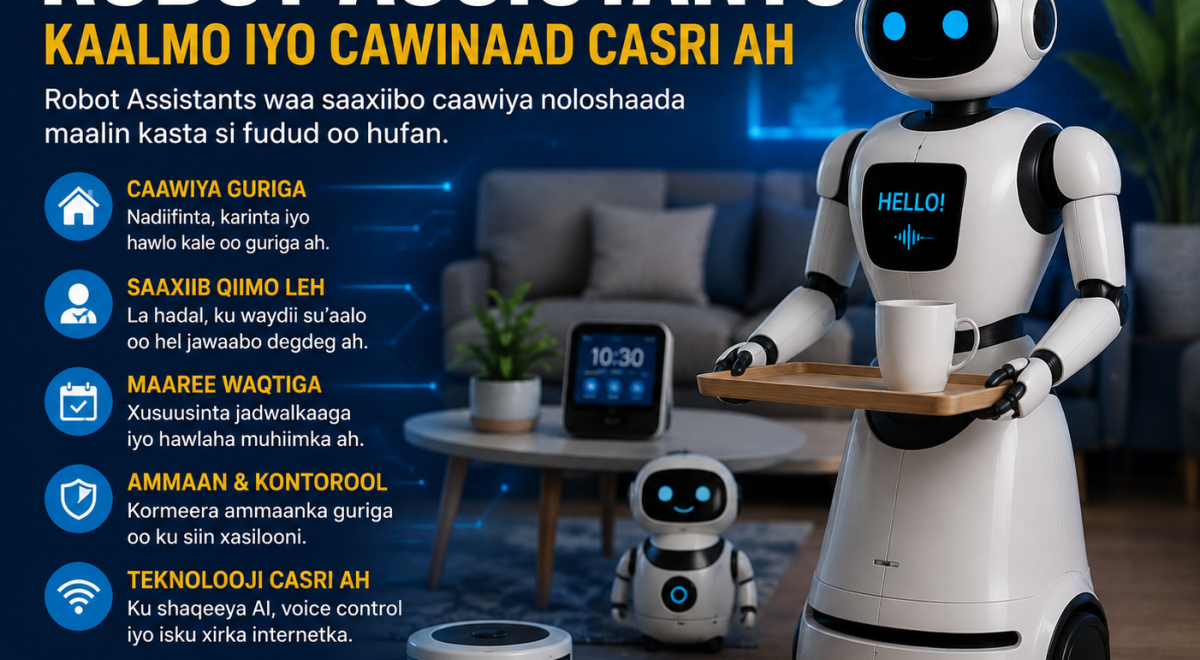
1. Home Robot Assistants
These robots are commonly used in households.
Examples include:
- Robot vacuum cleaners
- Smart home assistants
- Security robots
They help with cleaning, security, and managing smart home devices.
2. Healthcare Robot Assistants
Hospitals and healthcare facilities increasingly rely on Robot Assistants.
Their responsibilities include:
- Assisting in surgeries
- Delivering medications
- Monitoring patients
- Supporting elderly care
These robots help improve healthcare efficiency and patient outcomes.
3. Industrial Robot Assistants
Manufacturing industries use robots to enhance productivity and precision.
Their tasks include:
- Assembly operations
- Packaging products
- Transporting materials
- Quality control inspections
Industrial robots help businesses increase output while reducing operational costs.
4. Educational Robot Assistants
Educational robots support both teachers and students.
Benefits include:
- Interactive learning experiences
- Coding education
- STEM skill development
They make learning more engaging and practical.
5. Customer Service Robot Assistants
Many businesses use Robot Assistants to improve customer support services.
They can:
- Answer customer questions
- Provide information
- Offer 24/7 assistance
These robots enhance customer satisfaction and reduce response times.
Benefits of Robot Assistants
Robot Assistants offer numerous advantages across various industries.
Increased Productivity
They can perform repetitive tasks quickly and consistently, improving overall efficiency.
Reduced Human Error
Robots minimize mistakes that often occur in manual processes.
Cost Savings
Businesses can lower operational expenses and improve resource management.
Improved Safety
Robot Assistants can handle dangerous tasks, reducing risks to human workers.
Better Customer Experience
Customers receive faster and more reliable service around the clock.
Real-World Examples of Robot Assistants
Amazon Warehouse Robots
Amazon uses thousands of robots in its fulfillment centers to move products efficiently and accelerate order processing.
Hospital Delivery Robots
Many hospitals deploy robots to transport medications, medical equipment, and supplies throughout healthcare facilities.
Robot Vacuum Cleaners
Millions of households use robotic vacuum cleaners to automate cleaning tasks.
Educational Robots
Schools and learning centers use robots to teach programming, engineering, and problem-solving skills.
Facts About Robot Assistants
- The global Robot Assistants market is growing rapidly.
- Thousands of companies are investing in robotics and artificial intelligence.
- Modern robots can operate continuously for extended periods.
- Healthcare facilities increasingly use robots to improve patient care.
- Manufacturing remains one of the largest sectors utilizing Robot Assistants.
Challenges and Limitations
Despite their many benefits, Robot Assistants also face several challenges.
High Costs
Advanced robotic systems can require significant investment.
Security Risks
Connected robots must be protected from cybersecurity threats.
Technical Issues
Hardware failures and software bugs can affect performance and reliability.
Job Displacement Concerns
Some people worry that automation may replace certain types of jobs in the future.
The Future of Robot Assistants
The future of Robot Assistants looks incredibly promising.
Expected developments include:
- More intelligent AI-powered robots
- Advanced healthcare assistants
- Smarter educational robots
- Highly capable home service robots
- Improved collaboration between humans and robots
As technology continues to evolve, Robot Assistants will become even more integrated into everyday life.
Internal Links
- Artificial Intelligence (AI)
- Machine Learning Guide
- Smart Home Technology
- Future Technology Trends
- Internet of Things (IoT)
External Links
- https://www.ibm.com/topics/robotics
- https://www.nasa.gov
- https://www.mit.edu
- https://www.britannica.com/technology/robot
- https://www.weforum.org
Frequently Asked Questions (FAQ)
What are Robot Assistants?
Robot Assistants are intelligent robotic systems or software designed to help people perform various tasks efficiently.
Where are Robot Assistants used?
They are commonly used in homes, hospitals, factories, schools, and customer service environments.
Are Robot Assistants safe?
Yes, when properly designed, maintained, and secured, Robot Assistants are generally safe to use.
Can Robot Assistants replace humans?
Robot Assistants can automate certain tasks, but they still require human supervision, programming, and decision-making in many situations.
What is the future of Robot Assistants?
The future includes smarter, more capable robots that can assist with increasingly complex tasks across multiple industries.
Conclusion
Robot Assistants represent the future of intelligent technology. They improve productivity, enhance services, reduce errors, and help people perform daily tasks more efficiently. As Artificial Intelligence and Machine Learning continue to evolve, Robot Assistants will become even more powerful and useful.
Businesses, healthcare organizations, schools, and households are increasingly adopting Robot Assistants, demonstrating the significant role these technologies will play in shaping the future of society.https://risesom.com/wp-admin/post.php?post=316&action=edit

RiseSom is an online media platform sharing quality content on technology, business, finance, sports, travel, and global trends. We are committed to providing reliable, informative, and reader-friendly articles.
One Response
mtuzifgqtiqnzoewtwnqqzksygekve