
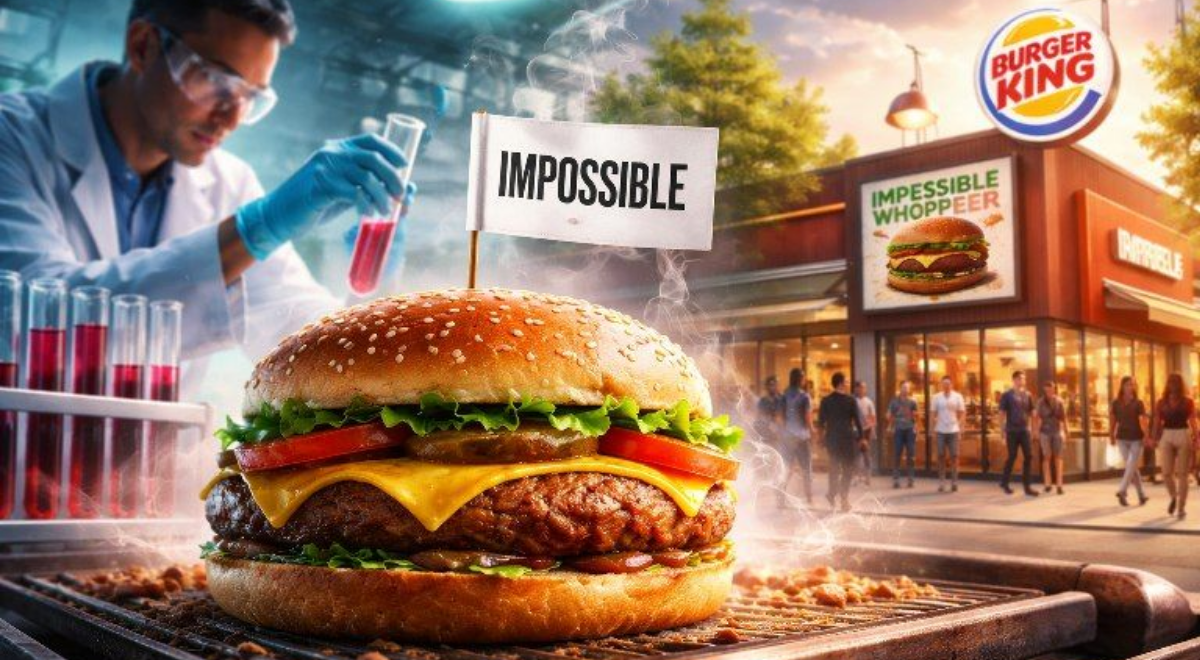
The Moment Impossible Foods Stopped Being a Science Project — and Became a Food Revolution
Focus Keyword: The Moment Impossible Foods Stopped Being a Science Project
Introduction
For years, plant-based meat was treated like a niche experiment. It was something people associated with health stores, strict vegans, or early-stage food science labs. But everything changed when Impossible Foods moved from being a “science project in a lab” to a mainstream food disruptor.
The Moment Impossible Foods Stopped Being a Science Project wasn’t just one event—it was a turning point in how the world saw food, sustainability, and the future of protein.
This article explains how that transformation happened, why it mattered, and what it means for the global food industry today.
What Was Impossible Foods Trying to Do?
Before it became a global brand, Impossible Foods had a simple but ambitious mission:
Create plant-based meat that tastes, cooks, and satisfies like real beef.
Founded by scientist Patrick O. Brown, the company started in a research-heavy environment. Early versions of their product were not meant for supermarkets—they were prototypes designed in labs, using molecular biology and food chemistry.
Key Early Goal:
- Replace animal meat without changing consumer habits
- Recreate meat flavor using plants
- Reduce environmental impact of livestock farming
At this stage, it was clearly a science experiment more than a consumer product.
The Science Project Phase
In the beginning, Impossible Foods was deeply technical. Researchers studied what makes meat taste like meat at a molecular level.
One breakthrough was identifying heme, an iron-containing molecule that gives beef its flavor and aroma when cooked.
Instead of using animal sources, they produced heme using genetically engineered yeast and plant proteins.
Why this mattered:
- It recreated the “bleeding” effect in plant-based burgers
- It mimicked the taste of real beef more closely than competitors
- It made skeptics question if it was “too scientific” to be food
At this stage, many critics still saw it as:
- Artificial
- Over-engineered
- Not ready for mass consumption
This was the “science project identity” phase.
The Turning Point: From Lab to Burger Chains
The real shift happened when Impossible Foods moved out of controlled lab environments and into real kitchens.
The Breakthrough Moment:
When major restaurants like Burger King tested the Impossible Burger in real menus.
Suddenly, it was no longer just a prototype. It was being:
- Grilled on fast-food kitchens
- Sold to everyday customers
- Compared directly with beef burgers
This was the moment The Moment Impossible Foods Stopped Being a Science Project became reality.
Why the Burger King Deal Changed Everything
The partnership with Burger King (Impossible Whopper) was a turning point for three major reasons:
1. Mass Exposure
Millions of customers tried it without realizing it was plant-based.
2. Real-World Testing
It had to survive fast-food cooking conditions, not lab environments.
3. Consumer Acceptance
People didn’t just tolerate it—they enjoyed it.
This was the first time Impossible Foods was judged not as a “lab product” but as a real food competitor.
From Experiment to Everyday Food
After the success of restaurant partnerships, Impossible Foods expanded into supermarkets.
Now the product was:
- Packaged like normal meat
- Cooked at home like beef
- Marketed to regular families
This shift was critical.
At this stage, Impossible Foods stopped being:
- A research experiment
- A startup curiosity
- A tech novelty
And became:
- A grocery store staple
- A household food option
- A competitor to traditional meat brands
What Made the Difference?
Several key factors pushed Impossible Foods out of the “science project” label:
1. Taste First Strategy
Unlike early plant-based foods, Impossible Foods prioritized taste over ideology.
2. Food Science Innovation
The use of heme and plant proteins created a realistic meat experience.
3. Aggressive Partnerships
Fast-food chains gave it global visibility.
4. Environmental Messaging
Consumers became more aware of climate change and meat production impact.
Example: Consumer Reaction Shift
Early Reaction (Lab Phase):
- “This is interesting science, but not food I’d eat daily.”
- “It’s too artificial.”
After Market Launch:
- “I can’t believe this isn’t beef.”
- “I might switch to this for health and environment reasons.”
- “It tastes like a real burger.”
This shift in perception marked the true transformation.
Environmental Impact Factor
One of the strongest arguments behind Impossible Foods was sustainability.
Livestock farming contributes significantly to:
- Greenhouse gas emissions
- Land usage
- Water consumption
Impossible Foods positioned itself as a solution.
Key Message:
“Eat meat without the environmental cost of meat.”
This helped move it from “science project curiosity” to a global climate solution conversation.
Internal Industry Disruption
The rise of Impossible Foods forced traditional meat companies to react.
Effects on the industry:
- Increased investment in plant-based alternatives
- Launch of competing products
- Expansion of hybrid meat options
Even major food corporations began exploring alternative proteins.
Internal Link Suggestions
To understand the bigger picture of food innovation, you may also read:
- Future of Plant-Based Meat Industry
- How Food Technology Is Changing Global Nutrition
- Top Sustainable Food Companies in 2026
Challenges Along the Way
Even after becoming mainstream, Impossible Foods faced challenges:
1. Price
Still more expensive than traditional meat in some markets.
2. Health Debate
Some consumers question processed ingredients.
3. Cultural Resistance
In meat-heavy cultures, acceptance is slower.
However, none of these stopped its growth trajectory.
Why This Moment Matters
The Moment Impossible Foods Stopped Being a Science Project is important because it represents a broader shift in human food systems.
It shows:
- Science can reshape everyday eating habits
- Consumers are open to change when taste is preserved
- Sustainability can drive mainstream food innovation
It wasn’t just a product launch—it was a food industry transformation milestone.
The Future of Impossible Foods
Looking ahead, Impossible Foods is likely to expand into:
- More protein alternatives (chicken, fish)
- Lower-cost production methods
- Global market expansion
The long-term goal is not just to replace burgers—but to redefine protein itself.
Conclusion
The journey of Impossible Foods from a laboratory experiment to a global food brand marks one of the most important shifts in modern food history.
The Moment Impossible Foods Stopped Being a Science Project happened when it left the lab and entered real kitchens, real restaurants, and real homes.
At that moment, it stopped being an experiment—and started becoming the future of food.https://risesom.com/wp-admin/post.php?post=309&action=edit