


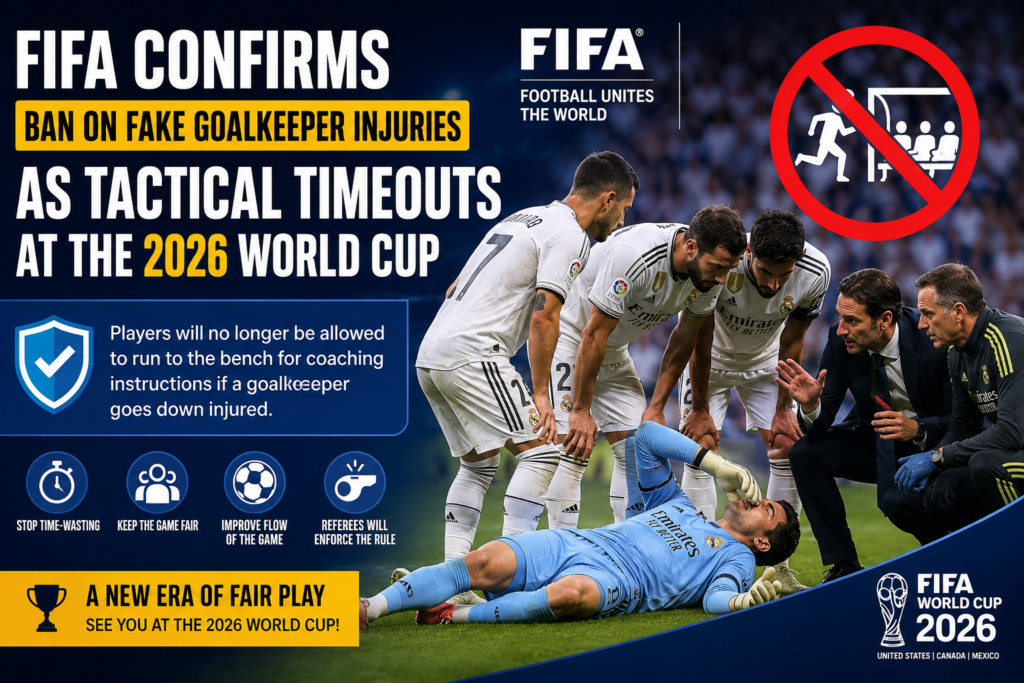
FIFA Confirms Ban on Fake Goalkeeper Injuries as Tactical Timeouts at the 2026 World Cup
Introduction
Football is constantly evolving, and FIFA continues to introduce new rules designed to improve fairness, reduce time-wasting, and enhance the overall flow of the game. One of the biggest rule changes ahead of the 2026 FIFA World Cup is the decision to ban the growing trend of fake goalkeeper injuries being used as tactical timeouts.
The practice has become increasingly common in recent years. Goalkeepers would go down injured, play would stop, and teammates would use the opportunity to gather around the coaching staff for tactical instructions. FIFA believes this tactic disrupts the game and gives teams an unfair opportunity to receive coaching during active match play.
This article explains the new FIFA rule, why it was introduced, how it will affect teams, and what it means for the future of football.
What Is the New FIFA Rule?
FIFA has confirmed that during the 2026 World Cup, players will no longer be allowed to run to the technical area or coaching bench when a goalkeeper is receiving treatment on the pitch. Instead, players must remain where they are or gather in the center circle until play resumes.
Key Points of the Rule
- Players cannot gather around coaches during goalkeeper injury stoppages.
- Referees will actively enforce the rule.
- Goalkeepers may still receive medical treatment.
- Teams cannot use injuries as unofficial tactical timeouts.
- The rule applies throughout the 2026 FIFA World Cup.
Why FIFA Introduced the Rule
The primary goal is to prevent teams from exploiting injury stoppages for tactical advantages.
Growing Concern in Modern Football
In recent seasons, managers have increasingly used goalkeeper injury stoppages as an opportunity to:
- Deliver tactical instructions
- Change formations
- Slow down the game’s tempo
- Break the momentum of opponents
- Allow players additional recovery time
FIFA officials believe these stoppages were never intended to serve as coaching breaks.
How the Tactical Timeout Worked
The tactic was relatively simple.
Typical Sequence
Step 1
The goalkeeper sits or lies on the ground claiming discomfort.
Step 2
Medical staff enter the field.
Step 3
Outfield players leave their positions.
Step 4
Players gather near the bench.
Step 5
The coach provides tactical instructions.
Step 6
The goalkeeper quickly resumes play.
Many fans and pundits argued that some of these stoppages appeared tactical rather than medical.
FIFA’s Official Explanation
FIFA Referees Committee chairman Pierluigi Collina explained that while goalkeepers have every right to receive treatment, other players do not have the right to leave the field for coaching discussions during injury stoppages. Referees have already been instructed to prevent teams from turning these situations into unofficial timeouts.
Main Objective
The objective is simple:
Keep football flowing and prevent tactical manipulation of injury breaks.
Impact on the 2026 World Cup
This new regulation could have a major influence on how teams manage matches.
Faster Match Flow
Games are expected to experience fewer unnecessary interruptions.
Benefits
- Better viewing experience
- Increased playing time
- Improved match rhythm
Reduced Time-Wasting
Many supporters have complained about deliberate interruptions.
The new rule aims to:
- Reduce delays
- Discourage simulation
- Improve fairness
Greater Tactical Discipline
Coaches must now communicate their plans during legitimate breaks in play.
Examples
- Halftime
- Hydration breaks
- Substitutions
- Normal stoppages
Teams can no longer rely on goalkeeper injury stoppages to deliver urgent tactical instructions.
Examples from Recent Football Seasons
Several high-profile matches sparked debate regarding tactical goalkeeper injuries.
Example Situations
- Teams protecting a narrow lead
- Coaches wanting to slow momentum
- Defenses needing organizational adjustments
- Players requiring recovery time
These incidents increased pressure on FIFA and IFAB to address the issue.
How Referees Will Enforce the Rule
Referees will play a critical role.
Responsibilities
- Prevent players from approaching the bench
- Keep teams on the field
- Ensure fairness during stoppages
- Maintain game flow
FIFA has instructed officials to be proactive throughout the tournament.
Will Players Receive Yellow Cards?
At present, FIFA’s guidance focuses on prevention rather than immediate disciplinary punishment.
Expected Approach
- Verbal instructions
- Referee intervention
- Preventing movement toward the bench
The emphasis is on controlling behavior before it becomes a problem.
Other Major Rule Changes for the 2026 World Cup
The tactical timeout ban is only one of several important updates.
Expanded VAR Powers
Video Assistant Referee reviews will cover additional situations.
Benefits
- More accurate decisions
- Improved fairness
- Better match control
Faster Substitutions
Players leaving the field during substitutions will be expected to do so more quickly.
Goal
Reduce unnecessary delays and time-wasting.
New Time-Wasting Measures
FIFA and IFAB are introducing several initiatives aimed at increasing effective playing time.
Objectives
- Faster restarts
- Improved game flow
- Better fan experience
Reaction from Fans and Experts
The football community has largely welcomed the change.
Supporters Believe
- It improves fairness.
- It reduces gamesmanship.
- It keeps matches moving.
Critics Argue
- Some injuries are genuine.
- Players occasionally need recovery periods.
- Enforcement may be challenging.
Despite mixed opinions, many observers agree that the practice had become increasingly noticeable in elite football.
Benefits of the New Rule
Fairer Competition
Teams compete without exploiting injury stoppages.
Better Entertainment
Fans want to watch football, not repeated delays.
Increased Playing Time
More action means a better viewing experience.
Improved Sportsmanship
The rule encourages honest competition.
Potential Challenges
Every rule change brings challenges.
Possible Issues
- Determining genuine injuries
- Consistent enforcement
- Player compliance
- Referee workload
FIFA will closely monitor how the rule performs during the tournament.
What This Means for Coaches
Managers must adapt.
New Priorities
- Better pre-match planning
- Clear tactical preparation
- Efficient communication
- Faster in-game decision-making
Coaches will need to rely on legitimate stoppages rather than unexpected goalkeeper injury breaks.
The Future of Football Rules
This rule reflects a broader trend in football governance.
FIFA’s Goals
- Reduce time-wasting
- Increase fairness
- Improve entertainment
- Protect the integrity of the game
As football evolves, more rule changes may focus on maintaining continuous play and improving fan engagement.
Internal Links
You may also enjoy reading:
- FIFA World Cup 2026: Everything You Need to Know
- The Biggest Rule Changes in Modern Football
- How VAR Is Changing Football
- The Future of Football Technology
- Top Football Innovations Shaping the Game
Conclusion
FIFA’s decision to ban fake goalkeeper injuries as tactical timeouts at the 2026 World Cup represents one of the most significant football rule changes in recent years. By preventing players from running to the bench for coaching instructions during goalkeeper injury stoppages, FIFA hopes to eliminate an increasingly controversial tactic that many believe disrupts the spirit of the game.
The new rule aims to improve fairness, reduce time-wasting, and keep matches flowing smoothly. Whether fans, players, and coaches fully embrace the change remains to be seen, but one thing is clear: football at the 2026 World Cup will look slightly different as FIFA continues its efforts to modernize and protect the world’s most popular sport.https://risesom.com/wp-admin/post.php?post=309&action=edit