
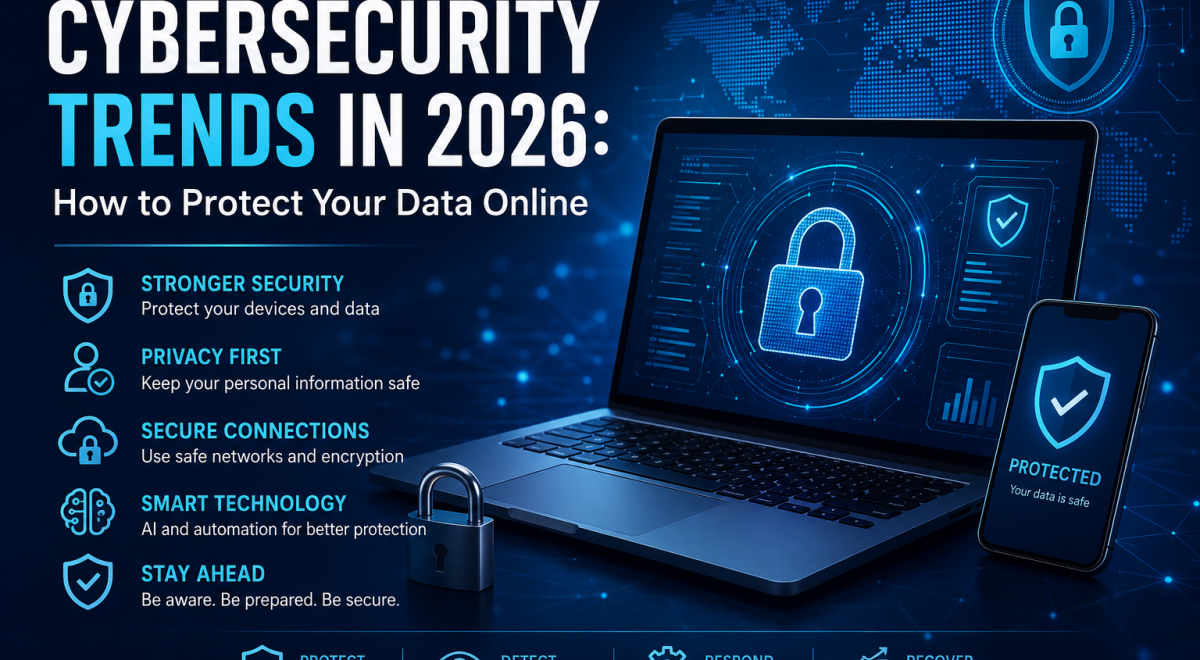
Cybersecurity Trends in 2026: How to Protect Your Data Online
Introduction
As technology continues to evolve, cyber threats are becoming more sophisticated and dangerous. Individuals, businesses, and governments are increasingly dependent on digital systems, making cybersecurity more important than ever before. From online banking and social media accounts to cloud storage and business databases, protecting sensitive information has become a top priority.
In this guide, we will explore the latest Cybersecurity Trends in 2026, understand the biggest online threats, and learn practical ways to protect your data online.
What Is Cybersecurity?
Cybersecurity refers to the practice of protecting computers, networks, applications, and data from unauthorized access, cyberattacks, and digital threats.
The primary goals of cybersecurity include:
- Protecting sensitive information
- Preventing data breaches
- Securing online transactions
- Maintaining privacy
- Ensuring business continuity
As cybercriminals become more advanced, cybersecurity strategies must continuously evolve to stay ahead of emerging threats.
Why Cybersecurity Matters in 2026
The world is more connected than ever before. Millions of people work remotely, use cloud services, shop online, and conduct financial transactions through digital platforms.
Key Reasons Cybersecurity Is Important
- Increased online activity
- Growth of cloud computing
- Expansion of artificial intelligence
- Rising ransomware attacks
- Greater dependence on connected devices
Fact
Global cybercrime damages are expected to cost businesses and individuals trillions of dollars annually, making cybersecurity one of the fastest-growing industries in the world.
Top Cybersecurity Trends in 2026
Let’s explore the most important cybersecurity trends shaping the digital world.
1. AI-Powered Cybersecurity
Artificial Intelligence is transforming both cyberattacks and cybersecurity defenses.
How AI Improves Security
- Detects suspicious activity faster
- Identifies unusual login attempts
- Monitors networks in real time
- Predicts potential threats
Example
Banks use AI systems to identify fraudulent transactions within seconds.
Benefits
- Faster threat detection
- Reduced human error
- Improved response times
2. Zero Trust Security Model
One of the biggest cybersecurity trends in 2026 is the adoption of Zero Trust Architecture.
What Is Zero Trust?
The principle is simple:
Never trust, always verify.
Every user, device, and application must be authenticated before accessing resources.
Why Businesses Use It
- Prevents unauthorized access
- Reduces insider threats
- Protects remote workers
Example
Employees must verify their identity using multiple security checks before accessing company systems.
3. Multi-Factor Authentication (MFA) Becomes Standard
Passwords alone are no longer enough.
What Is MFA?
Multi-Factor Authentication requires users to provide two or more verification methods.
Examples include:
- Password
- SMS code
- Authentication app
- Fingerprint
- Face recognition
Benefits
- Stronger account security
- Reduced risk of hacking
- Better protection against phishing
4. Rise of Ransomware Attacks
Ransomware remains one of the biggest cybersecurity threats.
How Ransomware Works
Cybercriminals:
- Infect systems
- Encrypt files
- Demand payment
- Threaten data exposure
Example
A business loses access to critical files until a ransom is paid.
Protection Tips
- Maintain regular backups
- Update software frequently
- Train employees on cybersecurity awareness
5. Cloud Security Becomes a Priority
More organizations are storing data in the cloud than ever before.
Common Cloud Security Risks
- Misconfigured settings
- Weak passwords
- Unauthorized access
- Data leaks
Best Practices
- Use strong encryption
- Enable MFA
- Monitor user access
- Conduct regular audits
Example
Companies using cloud platforms secure sensitive data through encryption and access controls.
6. Biometric Authentication Expands
Biometric security is becoming increasingly popular.
Common Biometric Methods
- Fingerprint scanning
- Facial recognition
- Voice recognition
- Retina scanning
Benefits
- Difficult to duplicate
- Convenient for users
- Stronger than passwords
Example
Modern smartphones use facial recognition to unlock devices securely.
7. Internet of Things (IoT) Security
The number of connected devices continues to grow rapidly.
Examples of IoT Devices
- Smart TVs
- Security cameras
- Smart speakers
- Smart home systems
Risks
Many IoT devices have weak security settings that cybercriminals can exploit.
Protection Strategies
- Change default passwords
- Install updates regularly
- Use secure Wi-Fi networks
8. Cybersecurity for Remote Work
Remote work remains common in 2026.
Security Challenges
- Public Wi-Fi usage
- Unsecured devices
- Personal device access
- Phishing attacks
Best Practices
- Use VPN services
- Secure home networks
- Update devices regularly
- Avoid suspicious emails
Example
Companies provide cybersecurity training to remote employees to reduce risks.
9. Data Privacy Regulations Continue to Expand
Governments worldwide are introducing stricter privacy laws.
Objectives
- Protect consumer information
- Improve transparency
- Reduce misuse of personal data
Impact on Businesses
Organizations must:
- Secure customer information
- Obtain proper consent
- Report breaches quickly
Benefit
Consumers gain more control over their personal information.
10. Advanced Threat Detection Systems
Traditional antivirus software alone is no longer sufficient.
Modern Security Solutions Include
- AI-powered monitoring
- Behavioral analytics
- Automated threat response
- Endpoint protection systems
Example
Security platforms analyze user behavior and identify threats before damage occurs.
Common Cyber Threats in 2026
Understanding threats is the first step toward protection.
Phishing Attacks
Fraudulent emails or messages designed to steal sensitive information.
Example
A fake banking email requests login credentials.
Malware
Malicious software created to damage systems or steal data.
Types
- Viruses
- Trojans
- Spyware
- Worms
Identity Theft
Criminals use stolen personal information for financial gain.
Targets
- Credit card information
- Social Security numbers
- Online accounts
Data Breaches
Unauthorized access to sensitive information.
Consequences
- Financial losses
- Reputation damage
- Legal issues
How to Protect Your Data Online
Following cybersecurity best practices can significantly reduce risk.
Use Strong Passwords
Strong passwords should contain:
- Uppercase letters
- Lowercase letters
- Numbers
- Special characters
Example
Avoid passwords such as:
- 123456
- Password123
Instead, create unique and complex passwords.
Enable Multi-Factor Authentication
MFA adds an extra layer of protection and should be enabled whenever possible.
Keep Software Updated
Updates often contain important security patches.
Update Regularly
- Operating systems
- Browsers
- Mobile apps
- Security software
Be Careful with Emails
Before clicking links:
- Verify the sender
- Check the URL
- Avoid downloading unknown attachments
Back Up Important Data
Regular backups help recover files after cyberattacks.
Backup Methods
- External hard drives
- Cloud storage
- Hybrid solutions
Use Secure Networks
Avoid accessing sensitive information on public Wi-Fi networks without protection.
Recommended Solution
Use a Virtual Private Network (VPN) to encrypt internet traffic.
Benefits of Strong Cybersecurity
Organizations and individuals benefit greatly from proper cybersecurity measures.
Key Advantages
- Better privacy protection
- Reduced financial losses
- Stronger customer trust
- Improved business continuity
- Lower risk of cyberattacks
Future of Cybersecurity Beyond 2026
The cybersecurity industry will continue evolving as technology advances.
Emerging Areas
- Quantum-resistant encryption
- AI-powered security systems
- Autonomous threat detection
- Secure digital identities
Organizations that invest in cybersecurity today will be better prepared for future threats.
Internal Links
You may also enjoy reading:
- The Future of Technology: 10 Breakthrough Innovations Shaping Tomorrow
- How Artificial Intelligence Is Transforming Businesses in 2026
- Top Technology Trends in 2026
- Best Emerging Technologies to Watch This Year
- Smart Devices and the Internet of Things (IoT)
Conclusion
Cybersecurity Trends in 2026 show that digital security is no longer optional—it is essential. As cyber threats become more advanced, individuals and organizations must adopt stronger protection strategies. AI-powered security, Zero Trust models, cloud protection, biometric authentication, and advanced threat detection systems are helping build a safer digital future.
By using strong passwords, enabling Multi-Factor Authentication, updating software regularly, and staying informed about cybersecurity risks, you can significantly improve your online safety. The future of cybersecurity will continue to evolve, but proactive protection remains the best defense against cyber threats.https://risesom.com/wp-admin/post.php?post=309&action=edit